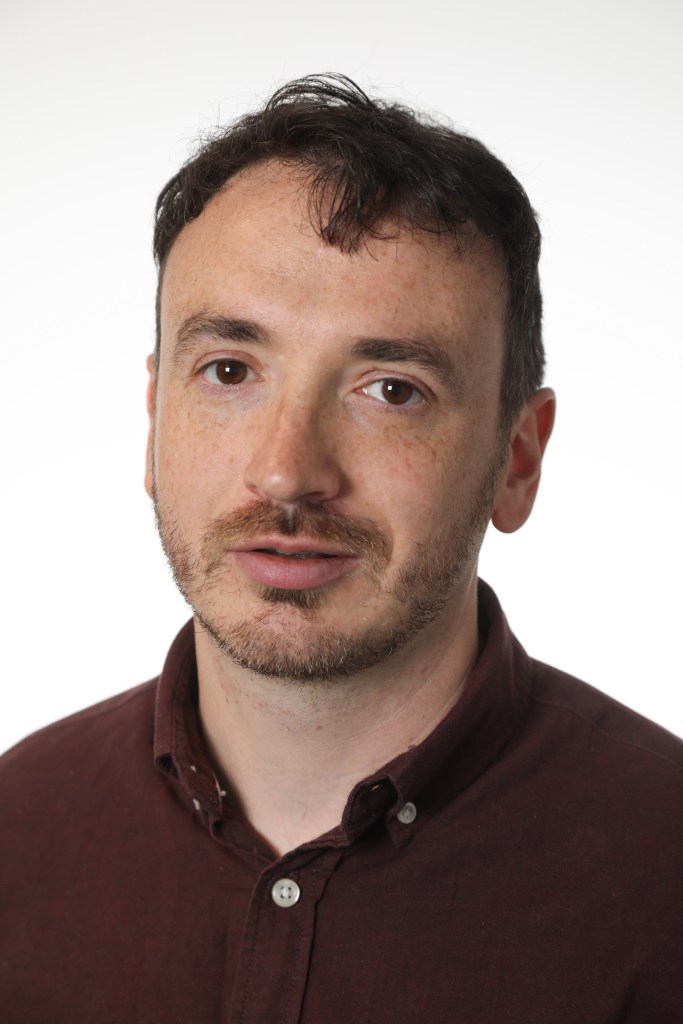
John Brady is a PhD candidate at the Centre for Irish Studies at the University of Galway. He focuses on literary representations of the Irish small town. He was interviewed by Gabrielle Machnik-Kekesi.
What first inspired you to go into academia? What inspires you still?
It was a few things that came together for me. I remember as a teenager reading John McGahern, Patrick McCabe, and especially Marina Carr – as much as they are all different, it really resonated with me that they all used the small town, or rural Midlands Ireland, as a setting. Reading them articulated something very familiar to me. I used to walk by the Centre for Irish Studies here at the University of Galway as an undergraduate. Eventually I looked up the MA, and I just couldn’t believe that I could study what they were offering. It took ten years working in the culinary industry to convince me that this was the right place for me (scenic route!). My MA dissertation contested the silence around the Daingean Reformatory, which is close to where I’m from. I was lucky enough that Síobhra Aiken was working in the Centre at the time. She had just published a book on this idea as it applies to the Civil War; she mentored and supervised me. My PhD now explores the place of small towns in the Irish literary imagination. There is plenty of academic attention dedicated to the potency of the west of Ireland, or Joyce’s Dublin, but small-town Ireland has not enjoyed the same spotlight, which is where my work comes in. I’m particularly interested in the period between the end of the second World War to the so-called ‘Celtic Tiger’ period in the 1990s. Ireland was transformed socially, culturally and economically in this period, but we don’t necessarily see this transformation in the representation of small towns. I’ve narrowed my work to look at Tom Murphy, Billy Roche, Mary Lavin, and John Broderick; I’ve found that the towns in which their works serve as a character and it’s sustaining me as a scholar.
Do you work best in the morning, the afternoon, or at night?
My mind is clearest in the morning for any kind of production, like writing; my best work is then if I can block off four hours with Flight Mode on. The afternoon is more coffee and paper-reading. I do my best to keep away from emails after 5.00 pm and at weekends, but my job as a coordinator for visiting students’ trips across Ireland prevents me from doing that sometimes.
Which words or phrases do you most overuse?
“You know?” My previous career as a chef definitely has something to do with this: giving half-directions and then saying, “you know, yourself.”
What’s your guilty pleasure while you write/research/prepare material/go to conferences?
Copious cups of coffee; there’s a gourmet coffee shop across the road from the Centre for Irish Studies here, Matt’s, where I’ll go on a particular stressful day. If I’m away, say for a conference, I’m always looking for good ramen. There’s a particularly good one in Cork called Miyazaki.
Do you use Twitter? If so, why? If not, why not?
I did a total social media purge during my MA, but was not really using Twitter at the time, so it wasn’t cut. Since starting my PhD, I’ve began using it again. It’s really handy for finding calls for papers and staying connected to academia around the world.
What are you looking forward to most in the next twelve months?
I’m very much looking forward to visiting south of France for the first time in the next few weeks for a quick break before the new semester begins. Beyond that, I’ve always been passionate about travelling around Ireland. My previously mentioned role as coordinating cultural exchange trips for visiting students has motivated me to go out and see the places to which I have not been. The next big one, for me, is Inis Meáin, the only Aran Island to which I haven’t been.
You can invite any six people (living or dead, real or fictitious) for a meal. Who’s coming to dinner?
I’ve been chewing on this one for a bit. I’ve always wanted to meet my father’s father; I’m his namesake, he’s the only grandparent that I haven’t met. He was also a shop-keeper in a small town and I wonder what he would say about my PhD work! In that vein, I’ve spent the last year trying to get inside the heads of my four main authors (Broderick, Roche, Murphy, and Lavin). It would be a privilege to sit down with the four of them. I’m also fascinated by the life and work of Maura Laverty. I had wanted to include her in my dissertation work, but she’s slightly outside my time period. She’s written fantastic books and plays, as well as Full and Plenty. I’d be nervous about cooking for her at this dinner, anyway…
Given the past few years, what makes you happiest, in or out of the classroom?
I have always been a walker, and I really came to appreciate that all the more during the pandemic. I’m lucky that my partner is also a walker. It wouldn’t be uncommon for us to go on a “short walk” on a Sunday and come back 25 or 30 kilometers later. I live just outside Barna, a beautiful coastal town in County Galway, so between the coast and the bog roads, we’re spoiled for walking route choice. I’d also be a big fan of spending the day in the kitchen. I tend to spend a day of the weekend in the kitchen with music playing loudly, cooking up meals for the entire week.
Do you have a favourite podcast?
I’m a big fan of Ian Lynch’s (of Lankum fame) Fire Draw Near that forensically dives into the world of Irish traditional music in all its myriad forms. It’s great company on the bus or out walking!
 Gender, Migration, and Madness Research Project